Cecilia MoSze Tham
Co-Founder of FutureFunded, Entrepreneur, Activist, Singularity University Fellow and Ambassador

- Mentored at Google Launchpad, Startupbootcamp IoT & Data, Numa, and Harvard Innovation Lab
- Former Product Strategy Expert at Google Developers Group and a certified Google Sprint Master
- Senior adjunct faculty at Parsons New School Global Executive Master for Strategic Design and Management
Check fees and availability for Cecilia MoSze Tham
About Cecilia MoSze Tham
Download ProfileWith decades of experience working in the intersection of entrepreneurship, technology, science and design, Cecilia is currently founder and CEO of Futurity Systems, providing futures-as-a-service to help companies and organizations to build better futures faster, together. Cecilia is currently a PhD candidate at Illinois Institute of Technology on her thesis in Design Futures.
Cecilia Tham is a Harvard-trained designer, formerly a Social Technologist at Alpha Telefonica, Europe’s first moonshot factory, and a serial entrepreneur, founded multiple companies such as Makers of Barcelona, FabCafe and allWomen.tech. She served as advisor to UN World Food Program X, SXSW, and previously for the City Government of Barcelona as well as other private companies. Futurity Systems is the official Moonshot Factory Specialist providing services to the Secretary of State of Spain in the Department of AI.
Cecilia is the winner of AWS Global Disruptor Award 2022, WEDO Women Pioneer Award 2022, and has been selected as Forbes Top 40 Futurists 2022, 100 Most Influential Women Europe and 100 Women of the Future . Futurity Systems has won Fast Company Innovation by Design Award 2022 as well as the gold Lovie Award 2022
Video Gallery
The Age of Autonomous Commerce| Cecilia MoSze Tham, ALPHA Telefonica | GIFLondon 2019
The power of us | Cecilia Tham | TEDxBarcelona
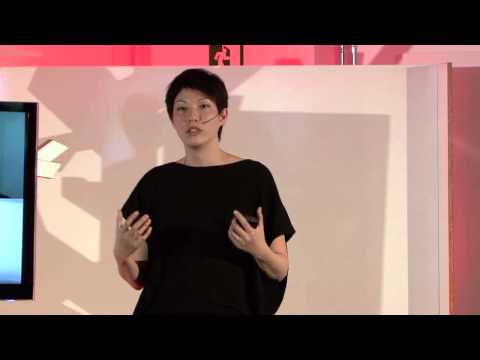
The Magic of Makers : Cecilia Tham at TEDxESADE
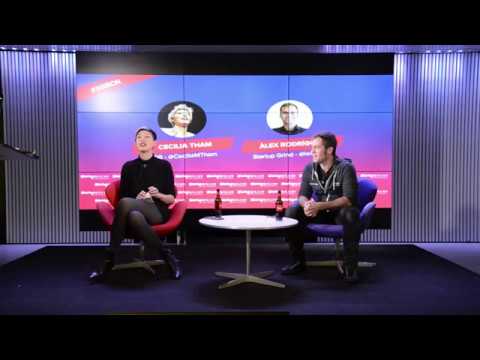
Cecilia Tham (CEO @ Makers Of Barcelona) at Startup Grind Barcelona
The Age of Autonomous Commerce| Cecilia MoSze Tham, ALPHA Telefonica | GIFLondon 2019
The power of us | Cecilia Tham | TEDxBarcelona
The Magic of Makers : Cecilia Tham at TEDxESADE
Cecilia Tham (CEO @ Makers Of Barcelona) at Startup Grind Barcelona
Speech Topics
Download TopicsArtificial intelligence, no doubt, will radically transform human existence in the years to come. As an example, the emergence of digital souls – advanced digital twins with consciousness-like properties – will revolutionize our relationship with technology as they inhabit smart environments and IoT devices. These entities will serve as persistent digital extensions of human consciousness, learning and evolving through continuous interaction. Generative AI will transcend current limitations, enabling direct thought-to-text translation and might allow for unprecedented interspecies communication by decoding and synthesizing animal cognition patterns. As AI systems develop more sophisticated complex forms of intelligence, we’ll see the emergence of hybrid intelligence networks where human and artificial minds collaborate in novel ways.
Autonomous commerce (aCommerce) gives money — and the ability to spend and earn it — to machines. It is to artificial intelligence what electronic commerce was to PCs, and mobile commerce to smartphones. Like previous digital waves, aCommerce is tiny now, but will transform industry and the economy by making transactions frictionless.
aCommerce will capture both financial and non-financial values, like CO2 footprint, to mitigate environmental and social costs of today’s economic system. It will unlock latent industrial capacity, unused goods and machines, and food, water, and energy – literally creating abundance from what we waste today. It will integrate distributed ledgers, predictive analytics, low-power networks, edge AI, and other technologies; leading to legal personhood for machines.
For most of history and for most people, food served a singular purpose: sustenance. But our relationship with food is changing, and it has definitely gone far and beyond survival. We now eat because of pleasure, because of our mood, our behavior, our tradition, and our culture.
The great decoupling is stemmed from the advancement of our technology, allowing us to separate those needs and want from food itself. From the decoupling of taste, smell, texture of food to the decoupling of culturing meat from animals.
Once decoupled, on the other spectrum is the ability to recouple, in ways we have never seen before. From designer meat to augmented satiety, how will these new technologies redefine our food in the future, now that they are rapidly infiltrating our farms, our kitchen, our restaurants even our bodies?
Biotechnology is burgeoning the way that information technology did 30 years ago, and for similar reasons: a young cohort of researchers looking beyond the lab and traditional boundaries. With IT, calculating missile trajectories and doing corporate accounting gave way to gaming, image recognition, natural language processing, and more. With biotech, tools applied to medicine and agriculture are now addressing sustainability, energy, new materials and even computing.
Now we are not only growing meat from cells, but also leather and spider silk for clothing, and horn identical to that from endangered rhinos to flood the market and eliminate the incentive for poachers. We are controlling brains with light (optogenetics), using brain-computer interfaces to exploit animal senses like dogs’ smell, and AI to decipher the languages of bees, birds, and whales. We are using DNA, proteins, and actual neurons to store data and do calculations, in massively parallel living computers running on wetware.
And as with IT, biohackers and startups are doing some of the most interesting – and alarming – explorations: cannabis plants that glow with jellyfish genes, or editing the banana genome to give it resistance to fungus. Thousands of students compete to engineer genetic machines in a worldwide event every year. Can the Apple, Google, and Microsoft of life be far behind?
The Metaverse will become the successor to the Internet. From the natural evolution of text, images, voice, video, now virtual and 3D, this is the beginning of the blurring of our virtual and physical worlds. As the TV was beaten by the PC, and smartphones overtook computers, new AI-driven, immersive interfaces we have long dreamt of are now finally arriving – if still in bits and pieces.
We are already seeing the interface war happening – from billions invested into voice assistants and AR/VR, the winning device that will interact with the consumer the most, will win the war and capture the most margin.
As Facebook, Tinder, and Netflix changed so much of how we live everyday life, new virtual worlds, such as esports, virtual goods, NFTs, will reshape business and society in ways we can’t quite yet see. Maybe not just influencing elections, news, friendship, dating or capitalism – making them a million times better, or even obsolete.
We take for granted the computing power in our hands, letting us hear any song ever recorded, reach the ear of any human in an instant, protect our privacy with encryption, and answer any question in an instant – all for (nearly) free. Looking back ten, twenty, or thirty years in the past, these powers were held only by governments, universities, publishers, and powerful corporations, which restricted each other via censorship, copyright, competition, and other legal and financial means out of reach of individuals. But individuals could soon afford, understand, and utilize these tools more quickly than legislators and companies could react. Was it really democracy, if these powers could be withheld from the people?
Once again, new tools are letting individuals do what only traditional sources of power could do before: creating currencies with blockchain, finding out their own genetic code, building flying robots that navigate on their own. But this is not the end of the road for people becoming powerful, especially thanks to AI and next, quantum computing. Not only will we be able to listen to any song, AI will be able to write and sing new ones for us. Our AI agents’ ears will be always ready to listen to us, and do anything for us that we can do (and more). It’s early days for QC, but researchers are projecting that by 2030, nothing kept secret by our current encryption will be possible to protect; and we will make one Nobel Prize-worthy discovery every 5 minutes. Will we the people wield our power wisely? Especially if it’s all for (nearly) free?
Augmenting humans is both less and more than it sounds. Less, because it’s not about engineering a class of mutant superheroes that the phrase conjures up; more, because we already augment our eyesight with glasses, our voice with loudspeakers, and other senses and abilities with other everyday technologies that give us superpowers in the eyes of those who came before us.
From echolocation to seeing infrared light, we will soon be equipped with capabilities beyond fixing our shortcomings, augmenting beyond human capabilities.
Beyond the everyday, these superpowers are on the way: Eye drops that eliminate the need for glasses are in clinical trials; electronic devices that control muscles digitally, and soft exoskeleton suits that allow the elderly to go snowboarding are in development. Farthest out is longevity, with a growing number of researchers and startups looking at ways to regenerate entire organs from our own genome, catch cancers in a single cell, eliminate the inflammation that causes neural degeneration, and gradually eliminate all the other causes of aging and death we currently face.
As futurists, we are often tasked with envisioning, preparing, prototyping and even rehearsing for the future, even when much of it remains uncertain. In this talk, we will explore how combining the rigor of science with the imagination of design can help us navigate the unknown and create a better future, we call this Design Science Fiction. From understanding emerging technologies and their impact on society, to using Synthesizing Futures (future based design thinking) to imagine new solutions to complex problems, we will examine how a combination of scientific analysis and creative thinking can inform our futurist perspective. The discussion will also address the importance of diversity and inclusiveness in futurist forecasting, and the need for interdisciplinary collaboration to ensure that future scenarios are grounded in reality and reflect the values and needs of all members of society. Join us for a visionary look at the future and the role that science and design can play in shaping it.
As futurists, we are often tasked with envisioning, preparing, prototyping and even rehearsing for the future, even when much of it remains uncertain. In this talk, we will explore how combining the rigor of science with the imagination of design can help us navigate the unknown and create a better future, we call this Design Science Fiction. From understanding emerging technologies and their impact on society, to using Synthesizing Futures (future based design thinking) to imagine new solutions to complex problems, we will examine how a combination of scientific analysis and creative thinking can inform our futurist perspective. The discussion will also address the importance of diversity and inclusiveness in futurist forecasting, and the need for interdisciplinary collaboration to ensure that future scenarios are grounded in reality and reflect the values and needs of all members of society.
Synthesizing Futures is designed for professionals to upskill their foresight, future literacy, and future making capabilities. Participants can start with an idea, a problem, or just an area of curiosity; and finish with a detailed understanding of its causes and consequences, a narrative and conceptual prototype of a future product (or business model, policy, service…), and a roadmap to reach the future space.

Related Links



Big Ideas in 24 Hours
Our veteran team is standing by to help with big ideas and real perspective. Call us at +44 20 3038 4689, email us at [email protected], or click below for a custom speaker proposal.
Similar Speakers
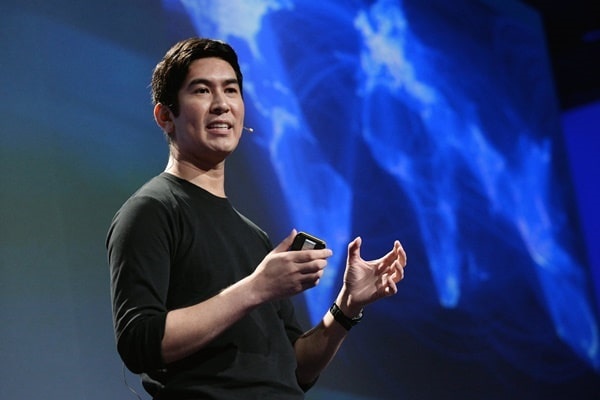 LAI Exclusive
Dex Hunter-Torricke
Emerging Technologies Expert; Former Communications Executive at Google, SpaceX & Facebook

Greg Williams
Global Head of Technology and Innovation Thought Leadership at The Economist Group
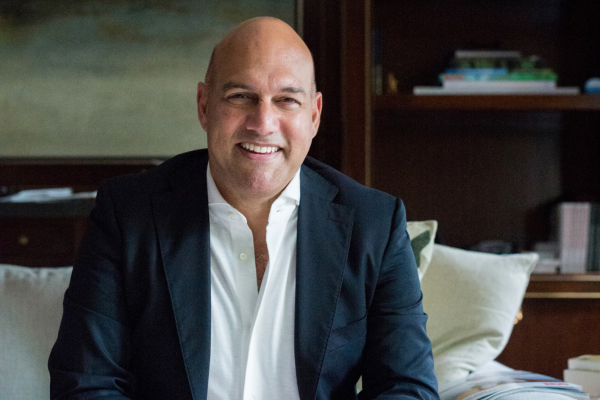
Salim Ismail
Founder & Chairman, OpenExO, Bestselling Author of “Exponential Organizations” and “ExO 2.0”, Former Yahoo VP