Most event planners are already familiar with ChatGPT. But today’s audiences are asking bigger questions about artificial intelligence and expecting events to provide informative sessions with answers.
From workforce transformation and cybersecurity to creativity and customer experience, generative AI is transforming how organizations operate across nearly every industry. In fact, the market is projected to reach over $327 billion by 2032. As a result, meeting planners are increasingly being asked to deliver programming that feels timely, strategic, and useful.
The challenge is that AI moves fast. Many planners are still figuring out how to navigate the broader AI landscape, identify the right topics, and select speakers who can explain these shifts in practical, engaging ways.
The good news is that you don’t need to become an AI expert overnight. This guide explores the evolving generative AI landscape and how meeting planners can create compelling AI programming that resonates with modern audiences.
Key Takeaways
- Generative AI extends far beyond ChatGPT and now impacts business strategy, operations, creativity, and workforce development.
- Audiences increasingly expect AI-focused content that feels practical, optimistic, and actionable.
- AI speakers can help attendees better understand innovation, workplace transformation, cybersecurity, leadership, and the future of work.
- Topics like multimodal AI, agentic AI, and small language models are becoming increasingly relevant across industries.
- Leading Authorities helps meeting planners identify AI speakers who align with audience knowledge levels, event goals, and industry priorities.

Mastering AI as a Major Event Topic
Artificial intelligence has rapidly evolved from a niche technology topic into a business-wide conversation. Organizations are now actively exploring how AI can improve productivity, strengthen decision-making, enhance customer experiences, and support innovation.
For meeting planners, this creates a major opportunity.
Today, audiences across industries want to understand:
- How AI will affect their work
- Which tools are worth paying attention to
- How organizations are using AI successfully
- What leadership looks like during rapid technological change
- How to balance innovation with ethics and trust
The most successful AI sessions help attendees feel informed and empowered rather than overwhelmed.
Understanding the Generative AI Landscape
Learning the full scope of generative AI helps you identify expert speakers whose knowledge aligns with your event goals.
Moving Beyond Basic Text Generation
ChatGPT helped introduce generative AI into mainstream conversation, but it represents only one part of a much larger technology ecosystem.
Today’s AI tools like ChatGPT, Claude, and Gemini can generate:
- Text
- Images
- Video
- Audio
- Code
- Data visualizations
- Strategic recommendations
Organizations are already using these tools to improve marketing, automate workflows, personalize customer experiences, streamline operations, and accelerate innovation.
Each application serves different business purposes and requires different expertise. For meeting planners, understanding these applications makes it easier to match speaker expertise to your audience’s specific needs.
AI Trends Event Audiences Care About
The best AI speakers help audiences connect emerging technology trends to real business challenges and opportunities. Acting on current trends enables you to develop forward-thinking event topics that resonate with your audience’s immediate concerns.
Right now, there are two core AI models your audiences encounter:
- Transformers: These models power tools like ChatGPT and are designed for generating humanlike text, making them useful for content creation, coding, and data analysis.
- Diffusion models: These models power advanced image and video generators used for marketing content, product visuals, and creative design.
Rise of Multimodal AI
One of the biggest developments in AI is the rise of multimodal systems — tools that can process text, images, charts, audio, and video simultaneously.
For example, a user can upload a chart, ask for analysis, and receive a written summary and strategic recommendations in a single interaction.
This shift is changing how organizations approach AI integration. Instead of managing separate tools for text, images, and data analysis, organizations can deploy unified systems that synthesize information from multiple sources.
Growth of Agentic AI Workflows
Agentic AI refers to systems that can autonomously complete multi-step tasks with limited human oversight. It represents an evolution beyond simple chatbots.
Organizations are beginning to use these systems to handle complex processes:
- Supply chain optimization: AI agents can monitor inventory, predict demand shifts, and automatically adjust ordering schedules.
- Customer service management: AI systems can route tickets, resolve routine issues, escalate complex cases, and track support trends with minimal human oversight.
- Software development: AI tools can write code, identify bugs, recommend optimizations, and help deploy updates more efficiently.
This trend creates compelling event topics around workforce transformation and the balance between automation and human oversight.
Impact of Small Language Models
While large AI platforms receive most of the attention, small language models (SLMs) are becoming increasingly important for organizations that prioritize:
- Enhanced privacy: Small language models can run locally instead of in the cloud, helping organizations keep sensitive data secure.
- Improved accuracy: Industry-specific training makes SLMs especially effective for fields like healthcare, finance, and legal services.
- Reduced latency: Faster processing supports real-time use cases, from customer service to operational decision-making.
Healthcare, legal, government, and financial sectors can especially benefit from using SLMs for specialized tasks that do not require the breadth of larger systems.
New Frontier of AI Creative Tools
AI tools are also reshaping creative industries. Text-to-video tools, image generators, music creation platforms, and AI-assisted design software are transforming how organizations create:
- Marketing content
- Training materials
- Product visuals
- Internal communications
- Event experiences
For meeting planners, these developments open the door to conversations about creativity, innovation, and the evolving relationship between humans and technology.
Using Generative AI for Business
Real-world applications of generative AI are helping organizations improve efficiency, personalize experiences, and rethink how work gets done. For meeting planners, these examples also create timely, relevant programming opportunities that resonate with today’s audiences.
Marketing and Personalization
Generative AI transforms how organizations create and deliver marketing content. AI tools can draft copy, tailor messaging for different audiences, and generate visual assets more efficiently and at scale.
Event planners are already using AI to enhance attendee experiences before, during, and after events. AI tools can personalize registration communications, recommend sessions based on attendee interests, and create customized post-event follow-up based on participation and engagement.
Operations and Analytics
The operational benefits of AI extend throughout the event lifecycle. AI tools can automate registration processes, analyze attendee feedback, streamline scheduling, and improve event resource planning.
Organizations across industries are also using AI to improve collaboration and decision-making. Research from Harvard Business School reveals significant performance improvements when teams integrate AI into their workflows. Teams using AI were three times more likely to produce ideas rated in the top 10% for quality compared to teams without AI support.
Understanding Generative AI in the Workplace
The impact of AI on the workforce has become one of the most important conversations happening across industries today.
300 million jobs worldwide could be affected by AI-driven automation. However, this shift signals a workplace transformation rather than simple job replacement.
AI is also creating new job opportunities in
- AI development
- Data analysis
- Cybersecurity
- Governance and compliance
- Workforce training and change management
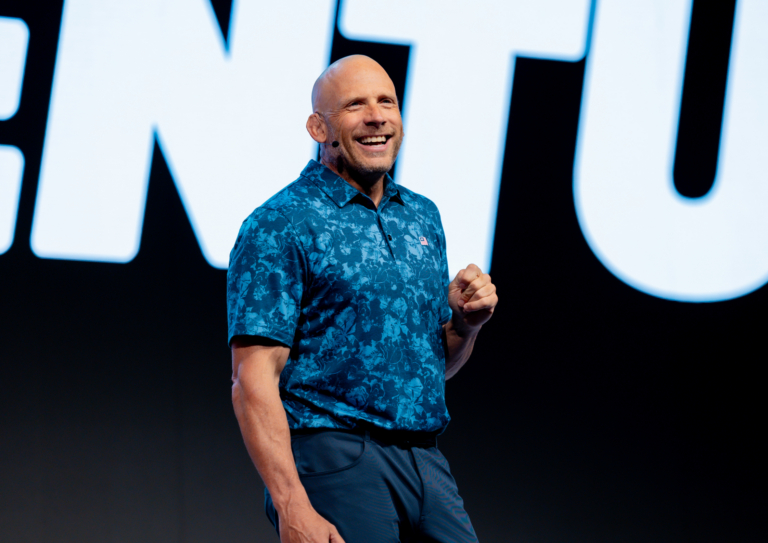
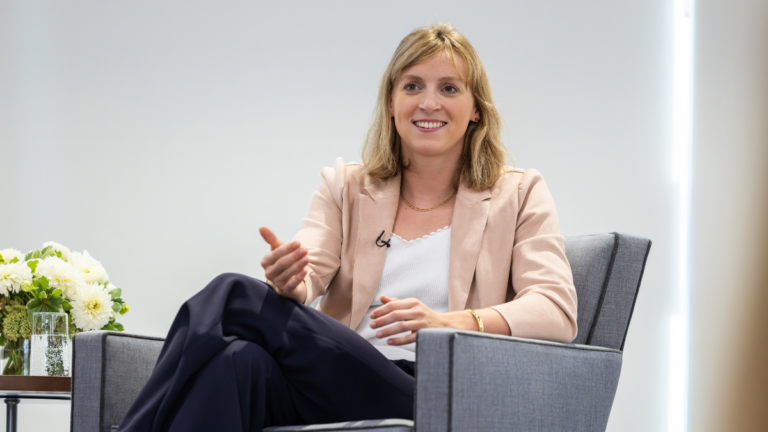
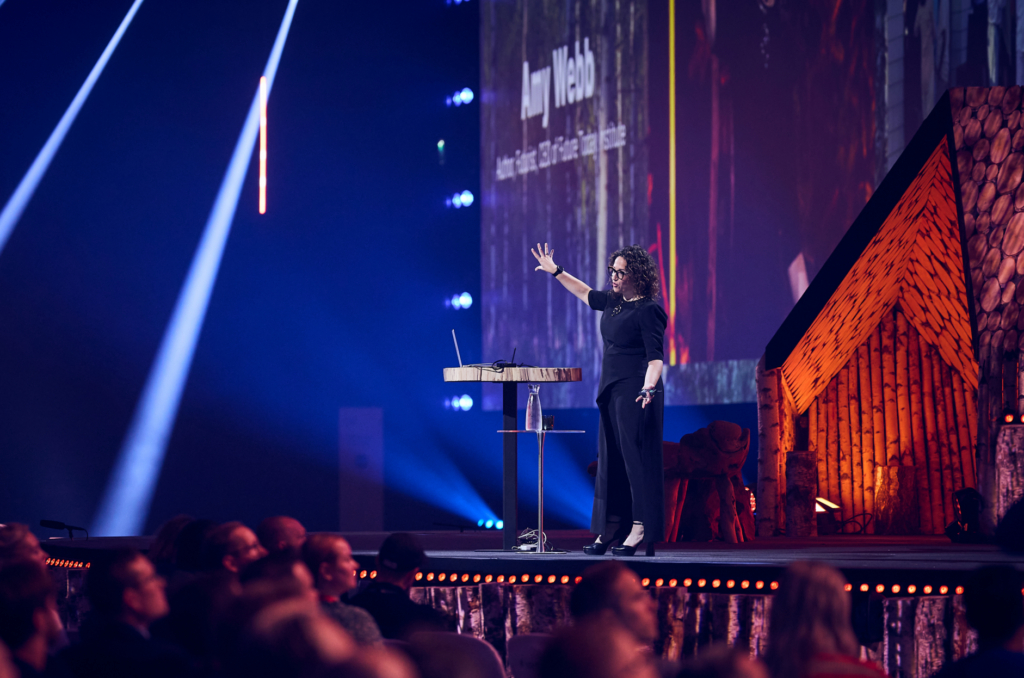
Event speakers like Paul Zikopoulos, Kelly Monahan, and Vinh Nguyen all take different approaches to AI, but can address these topics in a practical and optimistic way. They are known for delivering immediate value.

How to Create Compelling AI Event Topics
Successful AI sessions begin with understanding your audience’s comfort level and priorities.
Executive audiences often want:
- Strategic insight
- Future trends
- Leadership guidance
- Competitive implications
Operational teams may be more interested in:
- Workflow optimization
- Practical implementation
- Productivity tools
- Real-world use cases
Technical audiences may want:
- Integration discussions
- Security considerations
- Infrastructure implications
- Governance frameworks
The strongest AI programming avoids unnecessary jargon and focuses on practical relevance. Matching speaker expertise and presentation approach to your audience ensures your programming delivers genuine value.
Focus on Actionable AI Topics
Move beyond surface-level AI awareness to topics offering practical insights and actionable strategies. Consider these approaches:
- Agentic AI and the workforce: Explore how autonomous AI systems are reshaping organizational structures, leadership, and workforce skill requirements.
- Using AI for innovation: Highlight how organizations are leveraging generative AI to create new products, improve customer experiences, and drive business growth — not just reduce costs.
- Ethics and AI governance: Address important questions around bias, transparency, accountability, privacy, and responsible AI adoption in business.
Find the Right AI Event Speaker With Leading Authorities
AI is one of the fastest-moving categories in the speaking industry, which can make speaker selection difficult. Some speakers are deeply technical. Others focus on broad futurism. Some excel at motivating audiences around change management and innovation.
LAI’s sales team understands emerging trends and organizes speaker proposals to help meeting planners lead the conversation and drive value where you need it.
Leading Authorities represents diverse AI experts offering varied perspectives on this complex topic. Technologists can explain how AI systems work and what’s possible with current capabilities. Through our consultative approach, we match speakers to your specific audience level, event goals, and organizational context. Let us help you secure an expert AI speaker who can transform your event.
- Call us at 855-827-9635
- Email us at [email protected]
- Start a live chat
- Fill out our contact form