Technology continues to evolve at an extraordinary pace, reshaping industries, organizations, and daily life. From artificial intelligence breakthroughs to growing concerns about digital security, businesses in every sector are being challenged to adapt. As recent analyses from industry experts highlight, the most impactful technologies are no longer experimental. They’re being deployed at scale, influencing everything from infrastructure and healthcare to workforce planning and customer engagement.
This blog explores the top tech trends for 2026 and beyond, focusing on where organizations should pay attention and how these shifts affect long-term strategy to help executives, planners, and decision-makers remain competitive.
Artificial Intelligence and Machine Learning
Artificial intelligence (AI) and machine learning (ML) continue to rank among the most significant forces shaping the modern tech landscape. AI refers to systems that can process information, recognize patterns, and make decisions, while ML describes the subset of AI that enables algorithms to learn from data and improve over time. AI applications extend across sectors, making it a priority area for public and private investment. In 2024 alone, global equity investment in AI reached over $124 billion, with job postings in this sector rising by nearly 35% between 2023 and 2024, according to the management consultancy McKinsey.
Agentic AI
One of the most impactful developments is the rise of agentic AI. These systems act as virtual co-workers, capable of planning and executing multistep workflows autonomously. Beyond task automation, they can manage research, coordinate projects, and provide real-time analysis. Early adoption rates are still modest as organizations address challenges, but according to research by Deloitte, growth is promising.
Application-Specific Semiconductors
Another key advancement involves application-specific semiconductors. Traditional chips are reaching physical limits, and AI training and inference demands are pushing hardware innovation forward. These specialized semiconductors are tailored for faster processing and lower power consumption, directly supporting AI’s expansion across industries.
Extensive Industry Impact
AI’s reach now extends well beyond technology firms into sectors such as:
- Healthcare: ML models are identifying diseases earlier than ever.
- Manufacturing: Predictive AI helps reduce downtime by anticipating equipment failures.
- Finance: Algorithms detect fraud in real time, protecting institutions and customers.
Cybersecurity and Data Privacy
As digital adoption accelerates, so does the threat landscape. Cybersecurity refers to the practices and technologies used to defend systems and networks, while data privacy encompasses policies that safeguard personal and organizational information. Several factors are shaping this domain:
Key Cybersecurity Factors
- Escalating risks: Cybercrime damages may reach $10.5 trillion annually in 2025. Critical infrastructure, healthcare systems, and financial networks are increasingly frequent targets.
- AI-driven defense: Security solutions now rely on artificial intelligence to predict and block attacks in real time. Machine learning enables adaptive defenses that evolve with new threats.
- Zero-trust architecture: Rather than assuming users or systems are safe, zero-trust frameworks verify every connection. This model is becoming a standard approach across industries.
- Data privacy laws: Regulations such as the Digital Operational Resilience Act (effective January 2025) and new U.S. state privacy laws in Texas, Oregon, and Florida indicate a global push toward accountability in data handling.
Organizations must also address trust. Consumers expect transparency in how institutions collect, store, and use data. Companies that provide clarity and empower users with control over their information will strengthen loyalty. By treating cybersecurity and privacy as strategic investments instead of mere compliance requirements, leaders create resilient foundations for innovation.
The Future of Work
The pandemic accelerated remote and hybrid work, and in 2025, these models continue to evolve with technology as the enabler. Technologies such as cloud computing, advanced connectivity, artificial intelligence, and automation are transforming roles, workflows, and workforce expectations in numerous ways:
- Hybrid models: Employees increasingly value flexibility, and companies adopting hybrid schedules are investing in tools that maintain productivity and culture.
- AI-powered support: By reducing administrative burdens, AI tools allow human teams to focus on strategic and creative work.
- Skills over degrees: McKinsey highlights that over 40% of employers now prioritize demonstrable skills over formal credentials in their hiring pipelines.
- Upskilling and reskilling: Companies focusing on continuous learning will adapt fastest. Technical skills remain critical, but so do soft skills such as leadership, collaboration, and adaptability.
For leaders, the opportunity lies in designing workplaces that balance efficiency with empathy. Organizations thriving in this new environment invest in reskilling programs, cultivating human creativity, and empowering employees to adapt alongside machines.
Sustainability and Green Technology
Sustainability has shifted from a corporate social responsibility talking point to a central business strategy. Green technology is at the forefront of this transition, driving innovations that help organizations reduce environmental impact while maintaining profitability. Global investment in clean energy surpassed $2.1 trillion in 2024, outperforming fossil fuel investments.
Notable advancements in include:
- Renewable energy integration: Breakthroughs in renewable energy, such as advanced solar panels and grid-scale battery storage, are making clean power more accessible and reliable.
- Sustainable supply chains: Transparency tools, often powered by blockchain, track materials from origin to market, reducing waste and ensuring ethical sourcing. In transportation, the rise of electric and hydrogen-powered vehicles is reducing emissions across supply chains.
- Sustainable computing: Data centers consume significant energy, but new approaches in energy-efficient hardware and cooling systems are reducing their footprint.
- Circular economy practices: Companies are adopting technologies that support recycling, reuse, and responsible sourcing of materials.
For many businesses, embracing sustainability is now a strategic advantage. Consumers are increasingly choosing brands that demonstrate environmental responsibility, while investors reward companies with strong environmental, social, and governance (ESG) practices.
The Metaverse and Web 3.0

The next evolution of the internet — often referred to as the metaverse and Web 3.0 — represents a shift toward decentralized, immersive, and interactive digital experiences. Although still in early stages, these innovations are attracting significant investment and experimentation across industries. Industry experts estimate that this industry will grow at a compound annual growth rate (CAGR) of 46.4% from 2025 to 2030, expanding the market size from $105.40 billion to $936.57 billion.
For businesses, the metaverse offers new channels for customer engagement and collaboration. For instance:
- It integrates virtual reality (VR), augmented reality (AR), and 3D environments for training and consumer experiences.
- Virtual offices allow global teams to meet in interactive environments.
- Brands are experimenting with digital showrooms and product launches.
Web 3.0 emphasizes distributed systems built on blockchain, allowing users more control over data and digital assets. These decentralized platforms enable secure peer-to-peer transactions and new economic models. However, Web 3.0 adoption comes with challenges related to privacy, interoperability, and accessibility. Organizations exploring this space must carefully weigh investment against readiness, ensuring they build meaningful experiences rather than novelty-driven campaigns.
Robotics and Autonomous Systems
Robotics and automation are advancing rapidly, moving from factory floors into nearly every sector of the economy, including healthcare, agriculture, logistics, and personal services. These technologies redefine productivity while expanding what is possible in dangerous, remote, or highly complex environments, including:
- Manufacturing and logistics: Manufacturing remains a leader in adoption, with robots handling assembly, inspection, and logistics.
- Healthcare: Surgical robots enable minimally invasive procedures with precision that surpasses human capability in certain contexts.
- Agriculture: Autonomous tractors and drones help farmers monitor crops, apply treatments, and boost yield.
- Transportation: Once limited to pilot programs, self-driving vehicles are now being deployed in controlled environments such as shipping yards and warehouses.
- Collaborative robots (cobots): Designed to work alongside humans, cobots support manufacturing, healthcare, and research environments, expanding human capacity.
For organizations, robotics represents both disruption and opportunity. Companies must ensure that robotic systems are safe, ethical, and transparent in their operations. When deployed thoughtfully, robotics can augment human effort instead of replacing it, freeing people to focus on innovation, problem-solving, and care.
Cloud and Edge Computing
The growth of cloud and edge computing is transforming how businesses store, process, and use data. Cloud services remain central to digital infrastructure, enabling organizations to scale quickly, reduce costs, and access advanced analytics without heavy in-house investment. Gartner projects global spending on public cloud services will surpass $720 billion by 2025, driven by increased reliance on Software-as-a-Service (SaaS), Infrastructure-as-a-Service (IaaS), and Platform-as-a-Service (PaaS).
At the same time, edge computing is gaining traction as companies seek to process data closer to its source. This approach reduces latency, improves speed, and supports applications requiring real-time decision-making. Combined with AI, edge computing can bring intelligence directly to devices, from autonomous vehicles to retail kiosks.
Advanced Connectivity
Advanced connectivity is accelerating innovation across industries. The rollout of 5G has already enabled faster speeds, lower latency, and greater bandwidth, powering applications such as smart cities, connected vehicles, and remote healthcare. Ericsson estimates that by the end of 2025, 2.9 billion mobile subscribers globally will have access to 5G networks.
The most notable impacts of advanced connectivity include:
- Smart manufacturing: Ultrareliable connections synchronize machines, improving efficiency and reducing downtime.
- Healthcare innovation: Remote surgeries and telehealth expand access through seamless, high-definition communication.
- Autonomous systems: Drones, vehicles, and robots depend on millisecond-level latency to operate safely.
Looking ahead, research into 6G promises even more radical improvements, with speeds up to 100 times faster than 5G and the ability to support trillions of connected devices. While commercial deployment may not arrive until the early 2030s, the groundwork being laid today is crucial. 6G is expected to enable innovations like holographic communication, precision robotics, and immersive mixed-reality experiences with unprecedented realism.
Internet of Things (IoT)
The Internet of Things (IoT) is expanding rapidly, connecting billions of devices across industries and households. From wearable health trackers to industrial sensors, IoT technologies are embedding intelligence into everyday objects. Analysts predict IoT could create up to $2 trillion annually by 2030, with industries like healthcare, manufacturing, and logistics leading adoption. Here are a few ways companies are integrating IoT into core business processes:
- Smart factories: Smart factories use IoT sensors to monitor equipment health, predicting maintenance needs before costly breakdowns occur.
- Proactive medical care: IoT devices are revolutionizing patient monitoring in healthcare, allowing real-time tracking of vital signs and faster emergency response.
- Supply chain management: Retailers rely on IoT for supply chain visibility, ensuring inventory levels remain optimized across global networks.
A major development is the convergence of IoT with AI and edge computing. Beyond collecting data, devices can now analyze and act on it locally, reducing latency and reliance on centralized systems. This agility makes real-time decision-making possible in fields like autonomous driving and precision agriculture.
Security and interoperability remain challenges. As the number of connected devices grows, so do breaches and data misuse risks. Companies are addressing these issues with advanced encryption, zero-trust frameworks, and evolving regulatory compliance.
Quantum Computing
Quantum computing is transitioning from experimental research to practical exploration. Unlike classical computers, which process data in binary bits, quantum systems leverage qubits that can represent multiple states simultaneously. As a result, they can solve certain types of problems exponentially faster than traditional machines.
McKinsey reports that quantum technology may generate up to $97 billion in global revenue by 2035, compared to only $4 billion in 2024. Promising applications include:
- Drug discovery: Simulating molecular interactions to accelerate the development of new medicines.
- Optimization problems: Enhancing supply chain routing, portfolio management, and logistics planning.
- Finance: Quantum algorithms can potentially optimize portfolios and manage risk at previously unattainable speeds.
One of the most pressing concerns is security. Quantum computers could eventually break current encryption methods, making the development of postquantum cryptography essential. Policymakers and businesses are preparing for a future where secure communications depend on entirely new cryptographic standards.
Tips for Leveraging Tech Trends in Your Next Event
For event planners, incorporating insights from the top tech trends can elevate programming from informative to unforgettable. Here are a few tips to help you position your event as forward-looking, impactful, and directly relevant to today’s decision-makers:
- Feature thought leaders: Audiences value authoritative voices. Consider inviting speakers with direct experience navigating complex challenges in sectors such as sustainability, advanced connectivity, cybersecurity, or robotics.
- Match topics to audience needs: Aligning topics with the audience’s needs is critical. For instance, if your audience includes corporate leaders, subjects like artificial intelligence, cybersecurity, or advanced connectivity may resonate most. For creative industries, themes such as immersive technology or the metaverse could spark deeper interest.
- Incorporate interactive formats: Use immersive technologies such as augmented or virtual reality to create memorable, hands-on experiences that bring complex topics to life.
- Balance vision and action: Attendees want to leave with inspiration and practical steps — pair sessions on future-focused trends with workshops that translate those ideas into actionable strategies.
Stay Ahead in a Fast-Paced World With Leading Authorities, Inc.
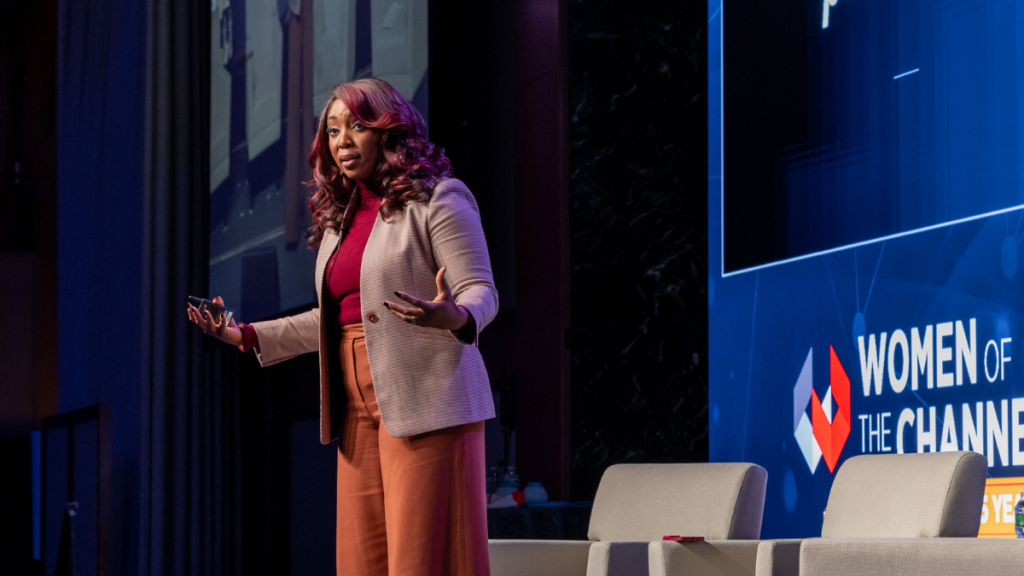
From artificial intelligence and advanced connectivity to sustainability and quantum breakthroughs, the latest tech innovations are shaping business strategy across every sector. For event organizers, these topics offer rich opportunities to spark conversations, share insights, and inspire action.
At Leading Authorities, Inc., we connect you with world-class speakers who bring these trends to life through compelling stories and practical insights. Our consultative approach focuses on understanding your goals and matching you with the right voices to achieve them. Whether you’re planning a national conference, leadership retreat, or industry forum, our team provides personalized guidance to help you select the right speaker and format to create an event that informs and inspires.Contact LAI Today