Many companies integrate AI by adding a chatbot to their website and calling it a day. True strategic integration doesn’t end there, though It uses AI as part of a broader corporate strategy that creates value and competitive advantages in a crowded, evershifting market.
Getting there will take careful preparation and education. With the right approach, your company can overcome these hurdles and reap the rewards.
1.Creating an AI Integration Plan
When integrating AI, start with a planning phase In this phase, you’ll:
- Set concrete goals
- Assess your infrastructure’s readiness
- Assess your employee’s readiness
If you don’t answer these questions, your company might struggle to capture the potential of AI. It won’t be able to solve highlevel business problems and optimize processes AI will just be technology for technology’s sake.
Set SMART Goals
Start by reviewing your company’s objectives and key performance indicators (KPIs).These represent your company’s current position and direction. Examine them carefully and look for:
- Bottlenecks in the company’s daily processes
- Potential growth opportunities
- Potential market threats
- Current customer experiences
You can consult department heads to identify high-impact pain points in each department, too. They’re your boots on the ground that can point out issues you might miss.
Then, set a series of SMART goals for AI integration. These goals should be specific, measurable, achievable, relevant, and timebound. For example, you might set a goal to reduce customer service response times by 30% with an AIpowered chatbot. Or, you might try to increase the accuracy of sales forecasts by 15% through predictive analytics.
SMART goals let you track your return on investment and build momentum with key stakeholders throughout the company. They also make your applications of AI more focused and adaptable.
Assess AI Readiness in Your Infrastructure and Employees
In 2024, around 40% of organizations had integrated or centralized data systems. Even fewer had the internal culture necessary to support effective AI integration.
To figure out where your company falls in this equation, you should:
- Run a data audit: This process will reveal whether your data is collected and shared consistently across your company’s platforms It will also identify security breaches. You can then address data silos and tighten security so AI can perform at its best.
- Evaluate your technology stack: Not all software can support AI tools or other software. If you want to get the most out of AI, it needs to be compatible with your work management platform and the other digital tools your company uses. Otherwise, AI can’t inform your core strategy
- Perform a skills gap analysis: Your team will likely need time to adapt to AI. A skills gap analysis helps you identify their weak spots so you can provide the training and resources they need most It may also reveal a need for data analysts and IT staff members who can work with AI.
- Assess the company culture: Your company needs to be open to datadriven decision-making and experimentation. If it isn’t included in policies or attitude, the benefits of AI integration will be limited.
The results of these assessments can inform some of your SMART goals. They can also lead to broader organizational shifts that will support strategic AI integration. Edit media
2.Identifying Specific AI Applications in Day-to-Day Operations
Once you have your objectives in place, it’s time to think about how you can achieve them by using AI to improve or change the routine tasks you and your team do every day. It’s where all that planning yields measurable business outcomes.
Just remember, the applications you choose should be extensions of the SMART goals you identified. Achieving your biggest goals starts at the lowest levels of business. Two of the most effective applications are automation and AIaugmented decision-making.
Automation is a powerful tool because it can free up your employees to do work that really matters. AI can’t and shouldn’t replace them it should make room for them to do what they do best. For example, you might use an AI agent to automate notetaking for meetings so that everyone can engage. Or, you could use a chatbot to help customer service agents focus on the most pressing customer concerns.
Enhancing decisionmaking with datadriven AI tools can be even more effective. It can also do more to empower your employees throughout the day. AI can spot hidden connections that people might miss, for example. This attention to detail can help everyone from HR reps to your legal team. It can detect simple grammatical mistakes and identify subtle patterns across your KPIs.
AI can also process vast datasets extremely quickly. It can examine years’ worth of sales data to generate quarterly financial predictions for your company’s key decision-makers. It can identify the most effective talking points from thousands of sales call transcripts. This capacity for data analysis makes AI a vital tool, especially for companies that produce and collect vast quantities of data. It’s already transforming strategic planning around the world.
Together, these two applications will change the landscape of your company.
3.Upskill Management and Other Employees
Many employees are already developing AI skills, but work is changing faster than many can keep up with. To get the most out of strategic AI integration, your team needs to know how to use AI effectively. Change management strategies can help.
- Be transparent: Before rolling out AI, explain your company’s motives. Clarify how AI will be used and what the company is going to do to make the transition smooth. This transparency can increase buyin and build trust in leadership.
- Start small: A progressive rollout can help employees adapt to the new technology. It gives them room to learn without overwhelming them. It also lets you adjust your approach as performance data rolls in and the team tries new things.
- Create a training program and specific AI policies: Training tells your employees what can be done. Policies tell your employees what won’t be done. Both are a vital part of an effective AI rollout and should be in place before AI is used at scale.
- Encourage experimentation: AI has opened up a new world of work. It’s both flexible and adaptable, so try to embrace that. Let your employees find what works for them and see if it can’t help others, too.
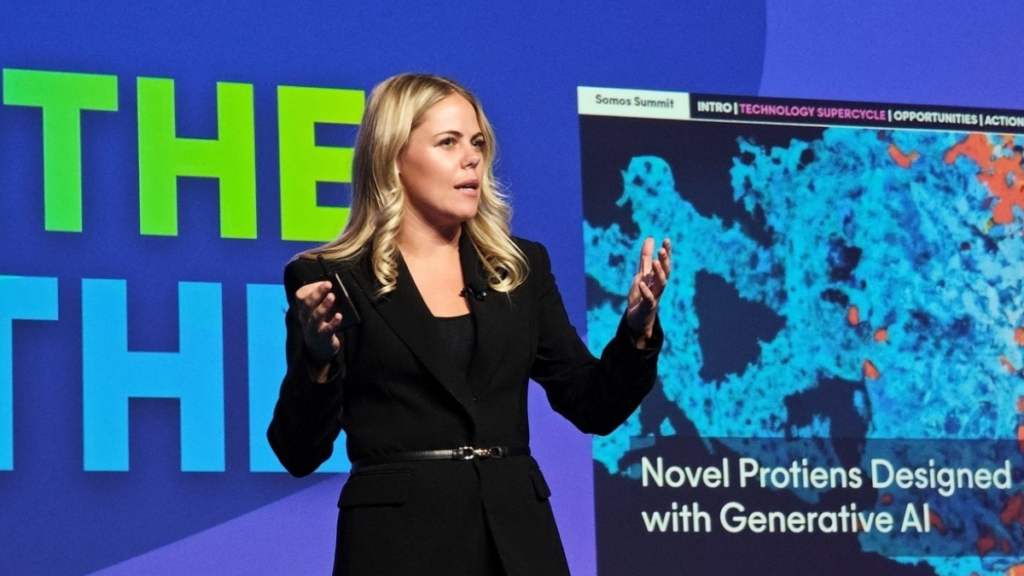
- Bring in a qualified speaker: Transformation is tough. Make things easier for your employees by bringing in a speaker to talk about the changes. Management might benefit from a leadership keynote speaker or AI speaker, for instance. Your company as a whole could learn from a speaker who’s familiar with technology and AI.
Find a Keynote Speaker Today
Strategic AI integration takes time and insight. Get direct insight from those who’ve been there. Leading Authorities, Inc can connect your company with some of the most insightful and respected speakers in your field. We’ll help you find the most impactful expert for your event.
To learn more, you can:
- Call us at 855-827-9635
- Fill out our contact form
- Start a live chat